

Regenerate SMPP ESME trunk credentials#
Regenerate the credentials of an SMPP ESME trunk, for example if they were exposed or as part of regular credential rotation. DIDWW replaces both the System ID and the Password. Then update every application that binds with the trunk.
Important
The System ID and Password are replaced immediately when you regenerate the credentials. There is no confirmation prompt. DIDWW closes every bind that is open with the old credentials within a few seconds, so connected applications are disconnected. Update every application right away so that it can bind again.
Before you begin#
An active DIDWW account is required. Sign in to DIDWW.
An SMPP ESME trunk is required. If you do not have one, see Create an SMPP ESME trunk.
Identify every application that binds with the trunk’s current credentials, so that you can update them right after you regenerate them.
Step 1: Open the credentials window#
In the DIDWW User Panel, go to SMS > SMS Trunks.
Locate the SMPP ESME trunk and click the key icon in its Credentials column.
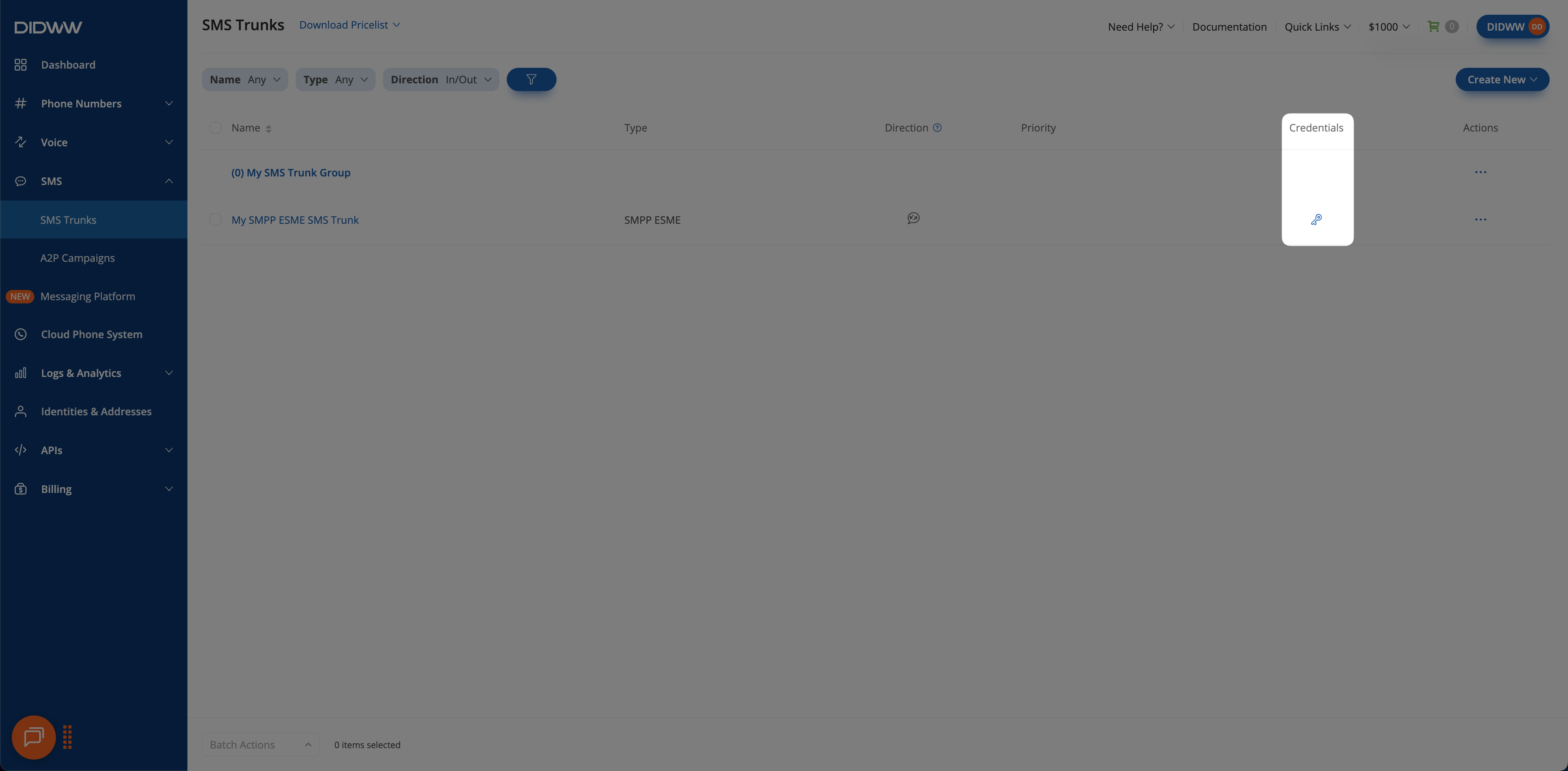
Fig. 1. Open the trunk credentials#
Step 2: Regenerate the credentials#
In the credentials window, click the regenerate icon (circular arrows) next to the Password field. The window shows the new System ID and Password right away.
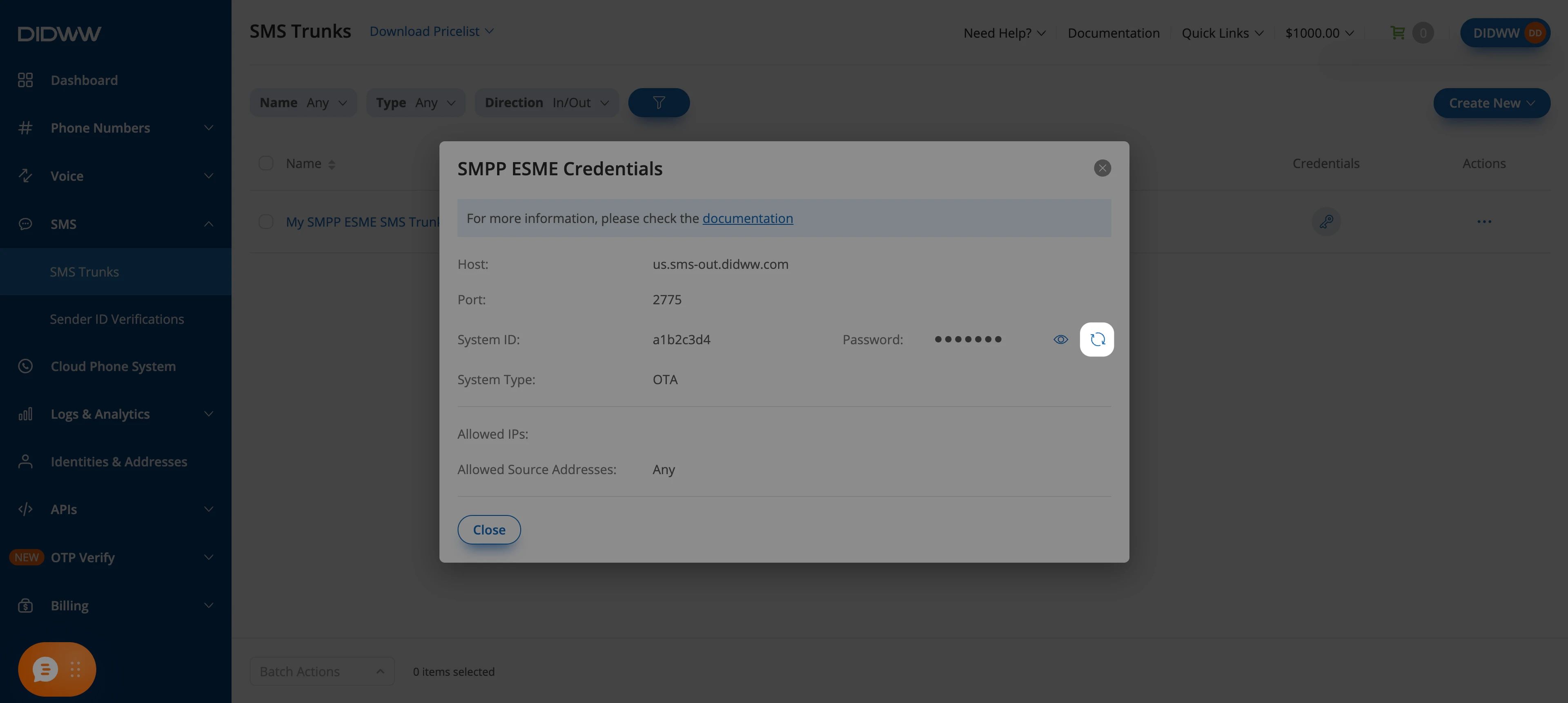
Fig. 2. Regenerate the credentials#
Step 3: Update your applications#
Click the eye icon next to Password to show the new password.
Copy the new System ID and Password, and update every application that binds with them.
Check that each application is connected. See Check SMPP ESME trunk connection status.
An application that still uses the old credentials cannot bind. DIDWW
rejects the bind request with the ESME_RBINDFAIL (0x0000000D) command
status and closes the connection.