

Create an HTTP IN trunk#
Create an HTTP IN trunk to forward incoming SMS messages from your DID numbers to a web server or application endpoint. Define the HTTP request that DIDWW sends for each message, and optionally add the trunk to an SMS trunk group.
For how DIDWW delivers inbound SMS to your endpoint, see HTTP IN trunk.
Before you begin#
An active DIDWW account is required. Sign in to DIDWW or Create DIDWW account.
A web server or application endpoint that accepts HTTP requests is required. If the endpoint is behind a firewall, allow requests from the DIDWW source IP addresses. See HTTP request details from DIDWW.
Step 1: Open the creation form#
In the DIDWW User Panel, go to SMS > SMS Trunks.
Click Create New in the top-right corner.
Select HTTP IN from the dropdown menu.
Fig. 1. Select HTTP IN#
Step 2: Configure the General settings#
In the General section, define how incoming SMS messages are delivered to your HTTP endpoint.
In Friendly name, enter a unique, descriptive name to identify the trunk.
In HTTP Method, select
GET,POST, orPUT. The default isGET.In Request URL, enter the URL of your web server or application endpoint. For example,
https://example.com/sms.Optionally, change the Validate HTTPS Certificate toggle (on by default) or the Follow redirect toggle (off by default).
Optionally, under Query Parameters, click Add Parameter to add key-value pairs to the request URL. Under Headers, click Add Header to add custom HTTP headers.
If you selected
POSTorPUT, under Body Parameters, select the Body type. For JSON or RAW, enter the Request body. For HTML Multipart or HTML URL Encoded, click Add Parameter to add key-value pairs.
Fig. 2. Configure the HTTP IN trunk#
You can use variables in the Request URL, Query Parameters,
Headers, and request body, for example {SMS_TEXT} for the message
text. Field definitions, defaults, and variables are listed in General
settings and Request variables.
Step 3: Add the trunk to a trunk group (optional)#
You may assign the trunk to an existing SMS trunk group in order to enable failover. Within the trunk group, the trunk’s priority determines the order in which trunks will be used. If the trunk will not be part of a trunk group, skip to Step 4.
Expand the Trunk Group Configuration section and select the group in Assign to trunk group.
In Priority, enter the trunk’s priority within the group, from
0to32767.
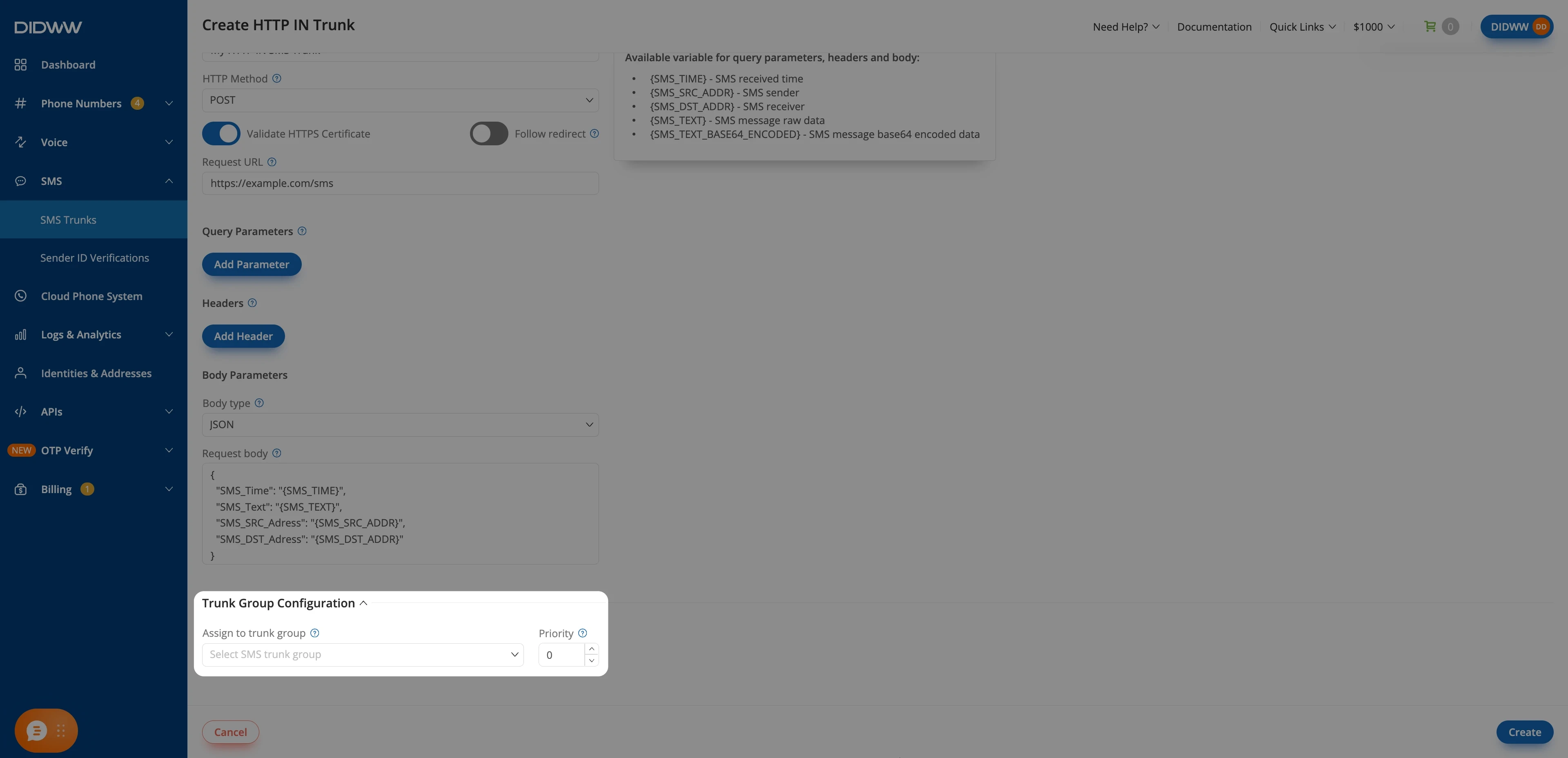
Fig. 3. Configure the trunk group settings#
Note
The system attempts to contact the target SMS trunk with the highest-numbered priority first.
Field definitions are listed in Trunk group settings. To create a group, see Create an SMS trunk group.
Step 4: Create the trunk#
Click Create at the bottom of the page to save the new trunk.
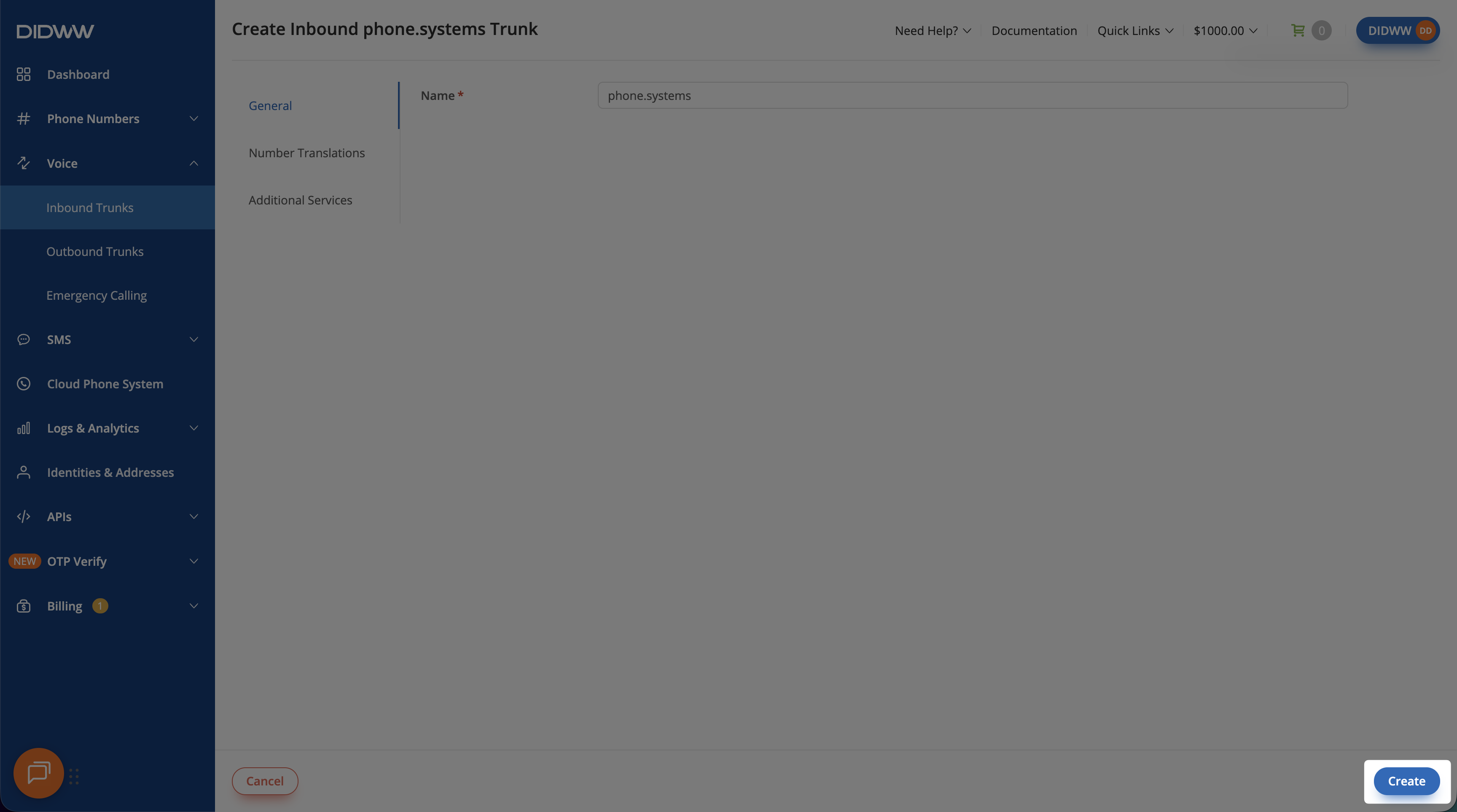
Fig. 4. Create the trunk#
The new trunk appears in the SMS Trunks list. Creating the trunk does not assign it to a DID number.
Next steps#
To receive messages, assign the trunk or its SMS trunk group to one or more DID numbers that support inbound SMS.
Send a test SMS to an assigned DID number and check that the request reaches your endpoint. If it does not, review Inbound SMS logs.