

Manage HTTP OUT trunks#
Manage existing HTTP OUT trunks from the SMS Trunks page. Edit a trunk’s settings, or delete trunks that are no longer required.
Before you begin#
An active DIDWW account is required. Sign in to DIDWW.
An existing HTTP OUT trunk is required. If you do not have one, see Create an HTTP OUT trunk.
Edit an HTTP OUT trunk#
In the DIDWW User Panel, go to SMS > SMS Trunks.
Locate the trunk you want to edit and click the Actions button next to it.
Select Edit.
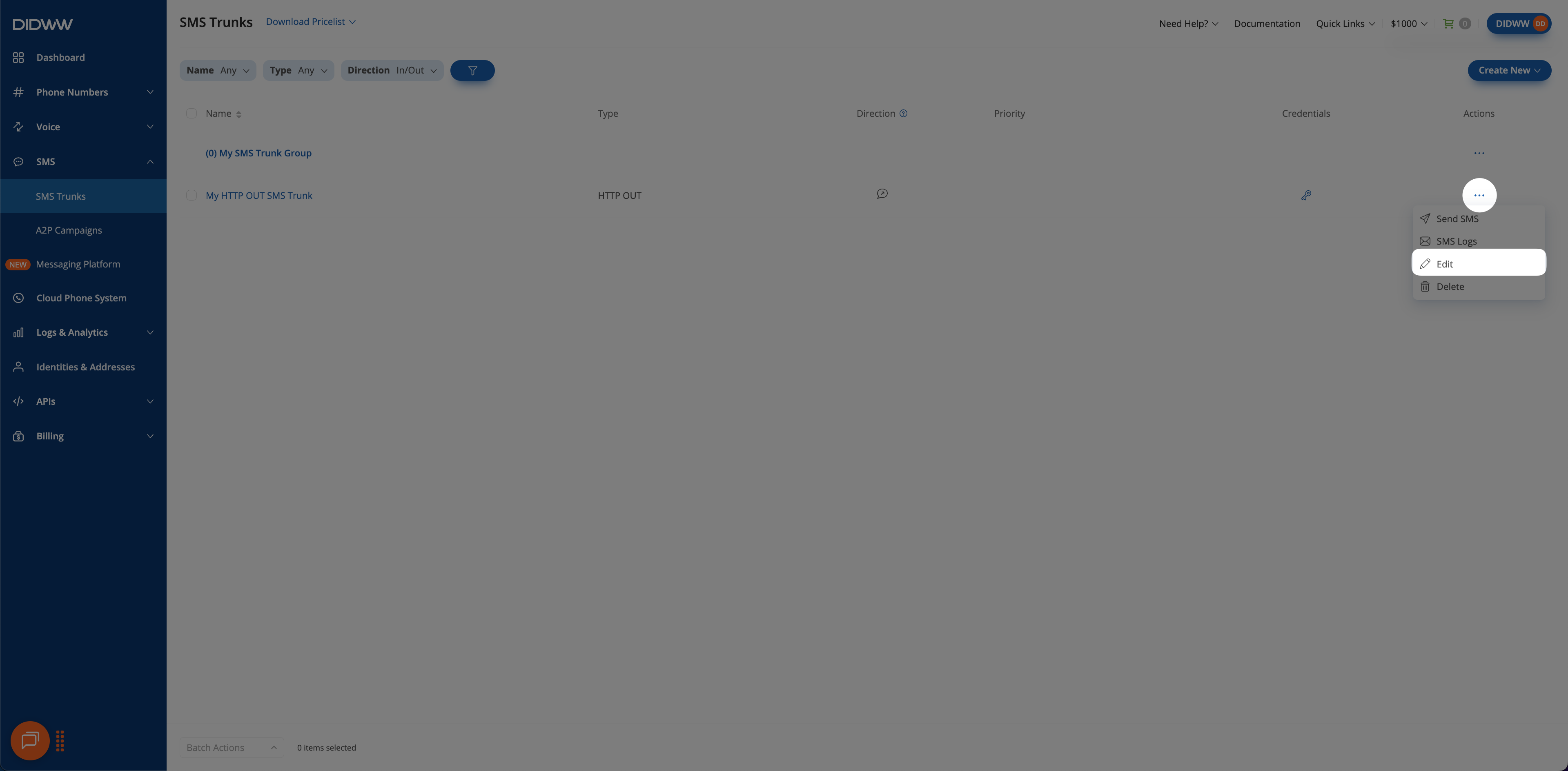
Fig. 1. Open the HTTP OUT trunk edit form#
On the Edit HTTP OUT Trunk page, modify the settings as needed. The sections match those on the creation form. See Configure the General settings and Configure the source addresses.
Click Submit to apply your changes.
For definitions, defaults, and formats of all settings, see HTTP OUT trunk settings reference.
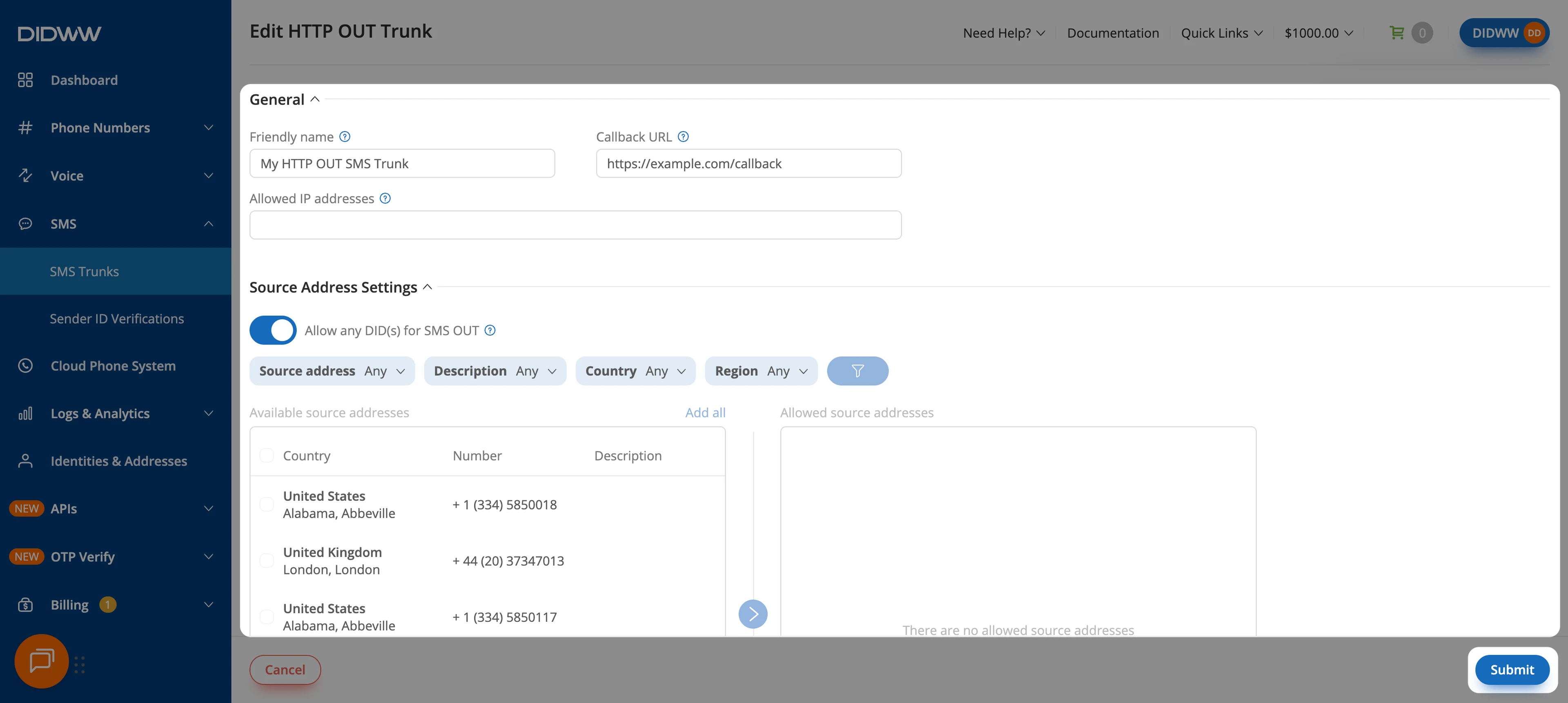
Fig. 2. Update and save the HTTP OUT trunk settings#
Delete HTTP OUT trunks#
Delete one HTTP OUT trunk from its Actions menu, or delete multiple trunks using Batch Actions.
Warning
Deleting a trunk is permanent and cannot be undone. Before you delete a trunk, make sure that no application or integration still sends messages with its credentials.
In the DIDWW User Panel, go to SMS > SMS Trunks.
Locate the trunk you want to remove and click the Actions button next to it.
Select Delete.
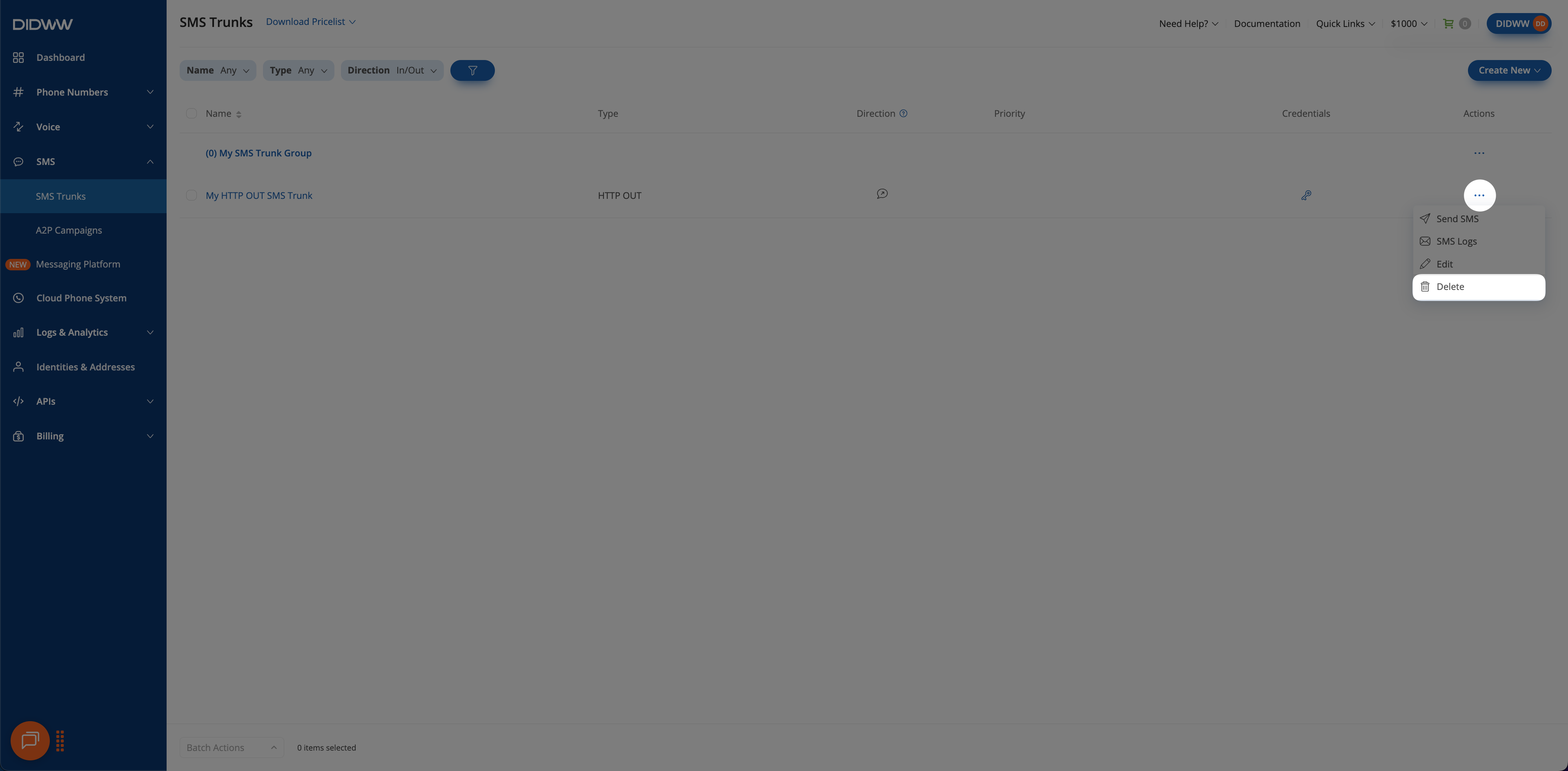
Fig. 3. Delete one HTTP OUT trunk#
In the Delete SMS Trunk(s) confirmation window, review the trunk and click Delete to permanently remove it.
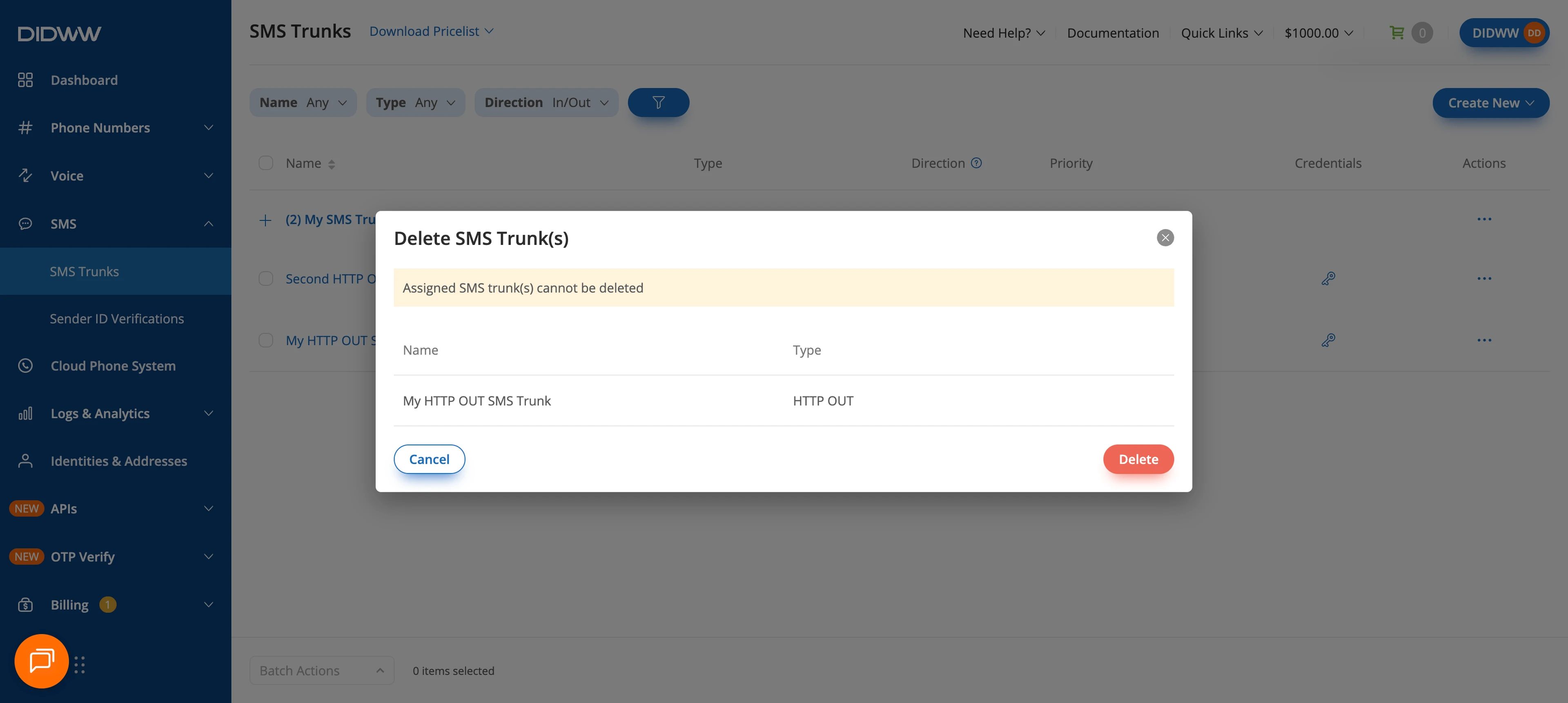
Fig. 4. Confirm the deletion#
In the DIDWW User Panel, go to SMS > SMS Trunks.
Select the trunks you want to delete by checking the boxes next to them.
At the bottom of the page, click Batch Actions > Delete SMS Trunk(s).
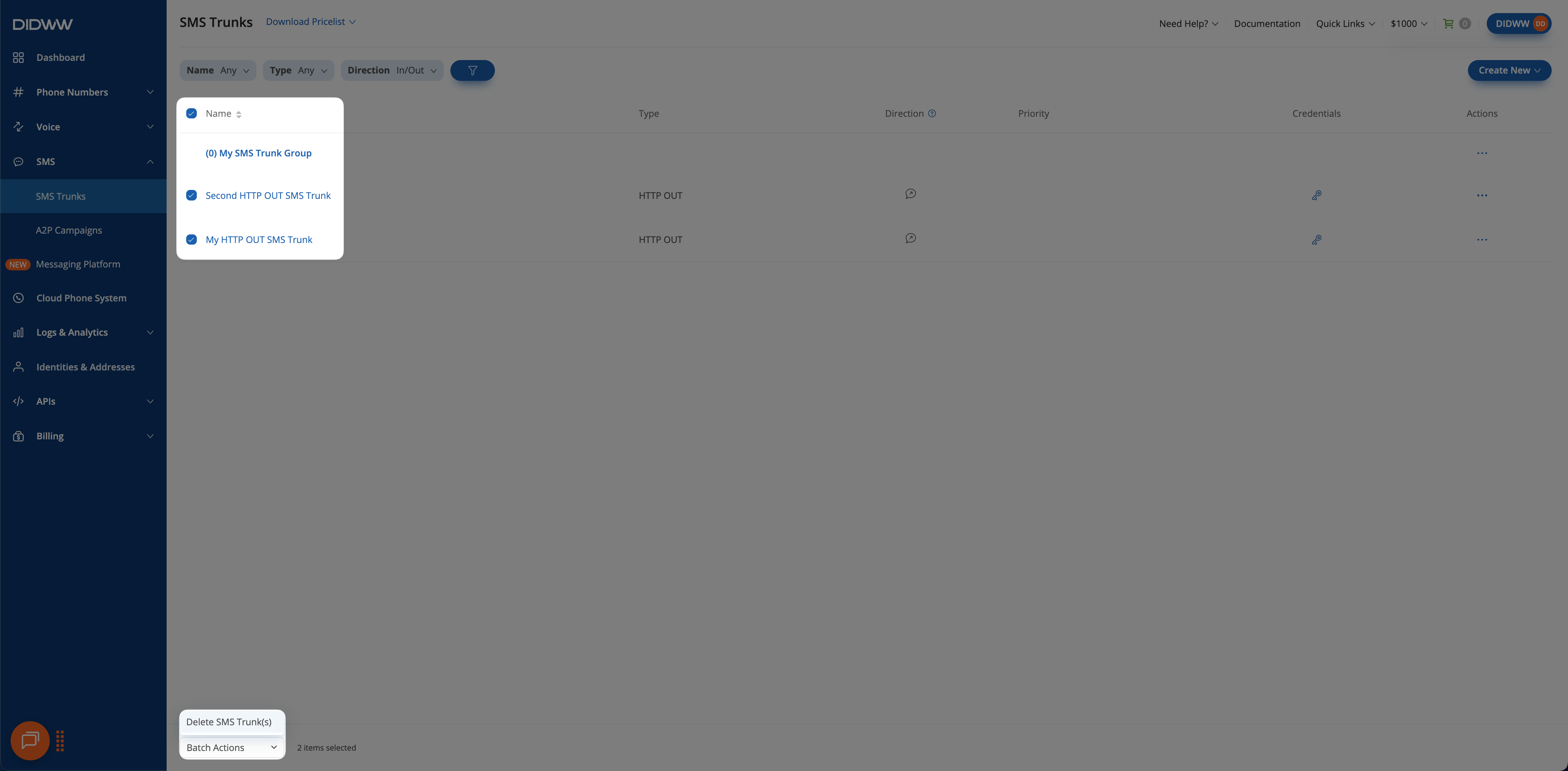
Fig. 5. Delete multiple HTTP OUT trunks#
In the Delete SMS Trunk(s) confirmation window, review the selected trunks and click Delete to permanently remove them.
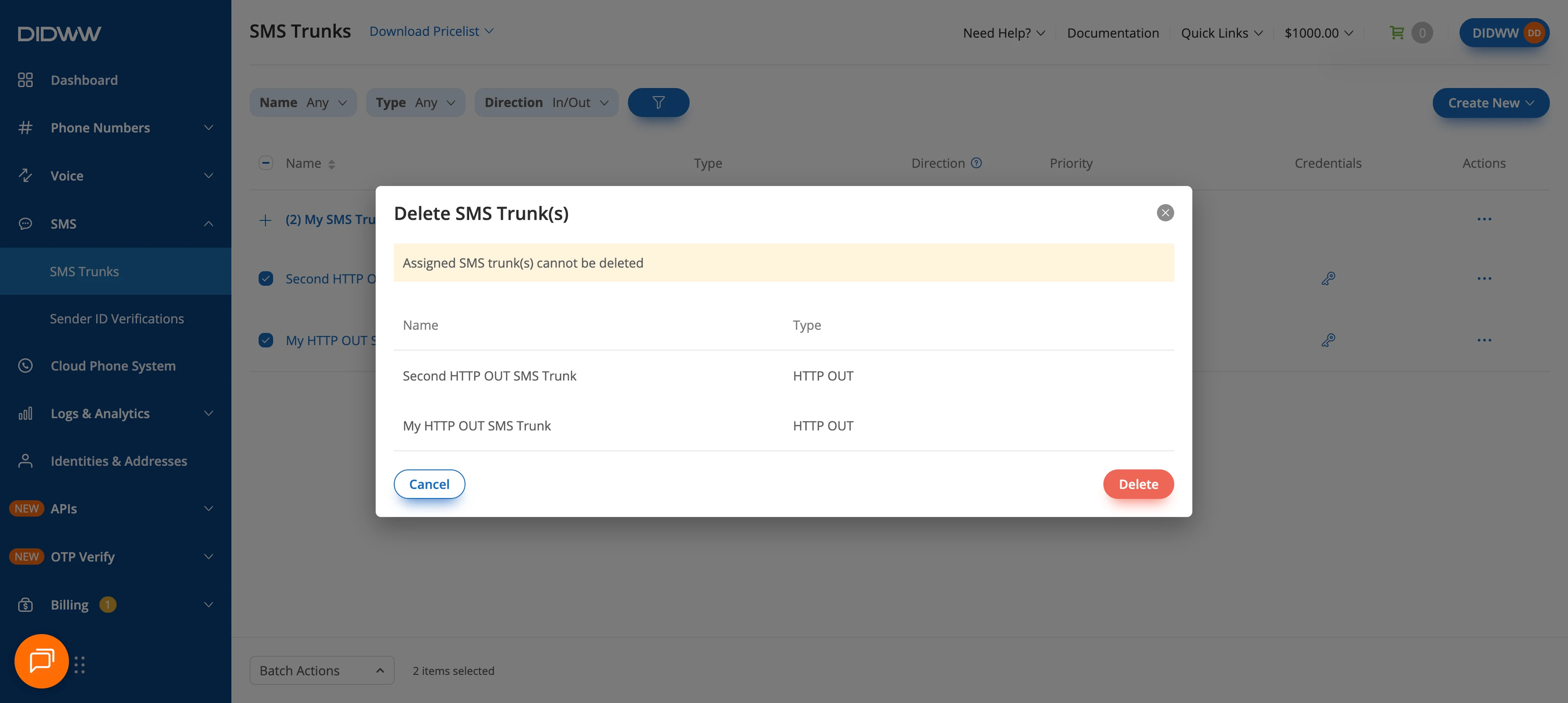
Fig. 6. Confirm the batch deletion#