phone.systems™ App Dial Pad

The Dial Pad interface in the phone.systems™ app lets users manually enter phone numbers to make outbound calls. It features a numeric keypad, a status indicator, an outbound caller ID associated with your account, and a call button for easy navigation and communication.

Dial Pad Interface

Fig. 1. Dial Pad Interface


Placing a Call

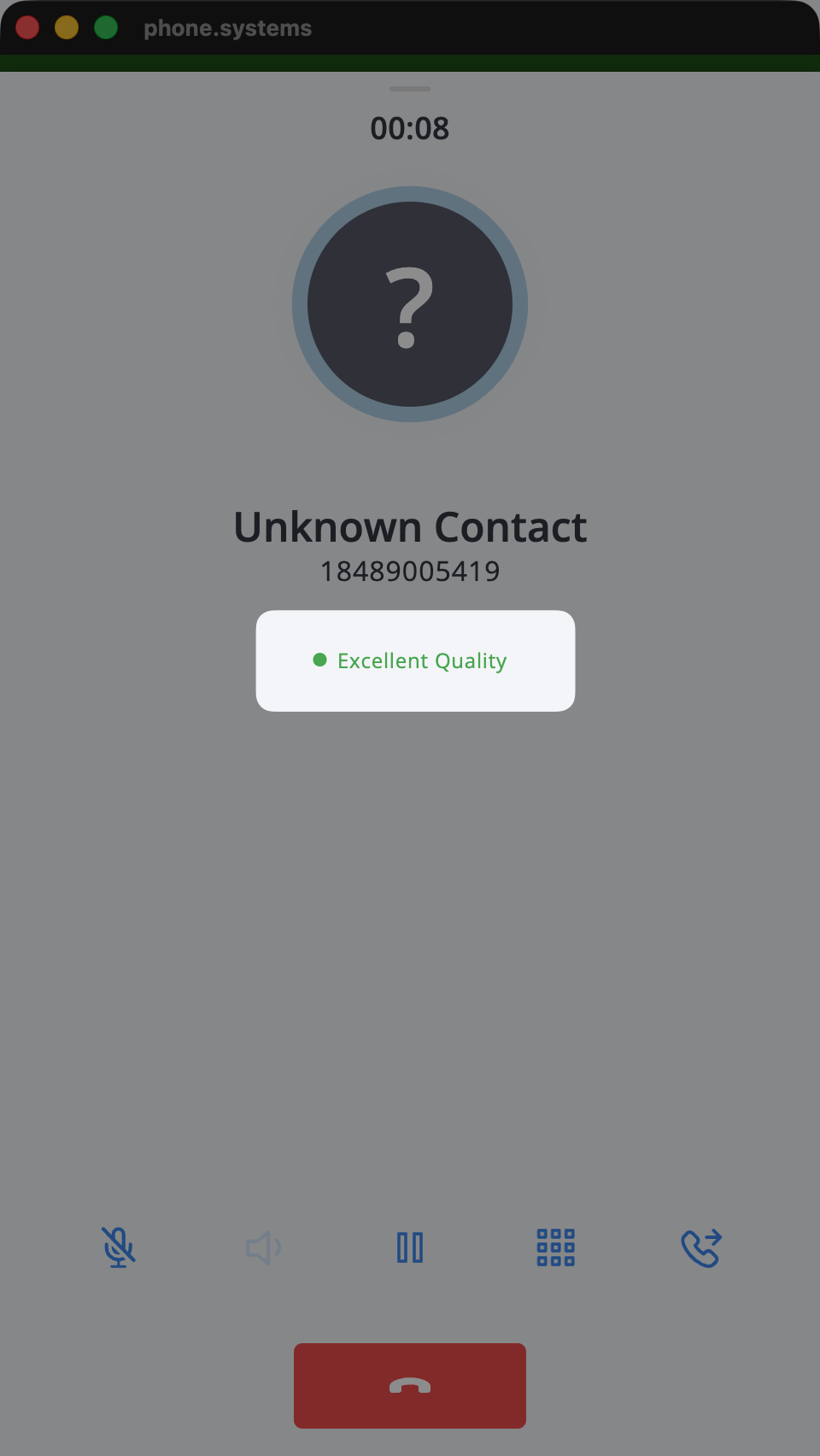
To place a call to an unknown number:

  1. Enter the recipient’s phone number or internal number.

  2. Click the call icon to initiate the call.

Calling An Unknown Number

Fig. 2. Calling An Unknown Number

To call a contact:

  1. Enter at least one digit to search for the number in your contacts list.

  2. Click the call-button next to the desired contact.

Alternatively, go to the contacts menu and select a contact.

Calling A Contact

Fig. 3. Calling A Contact

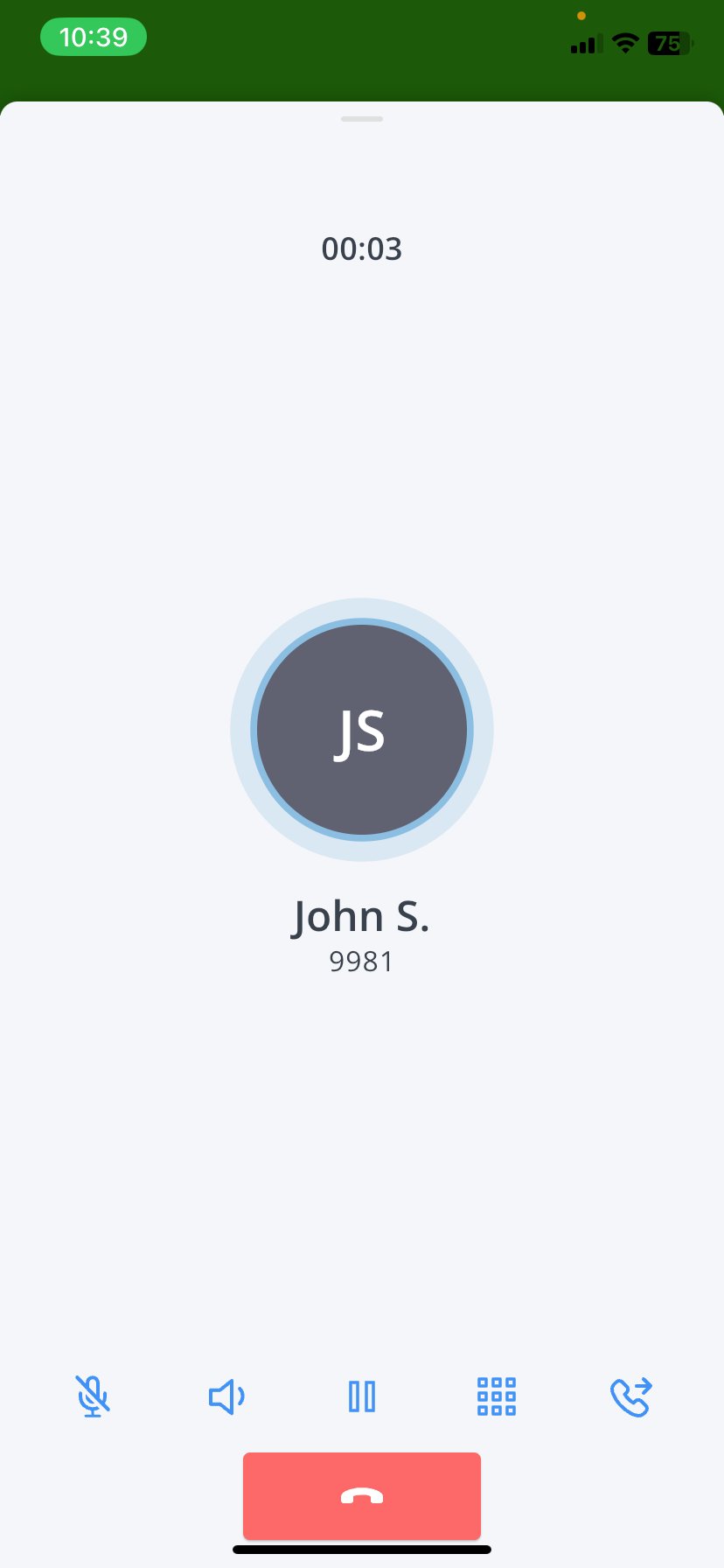
When the call starts, you’ll see the In-Call screen.

In Call Screen

Fig. 4. In Call Screen

Call Ended Screen

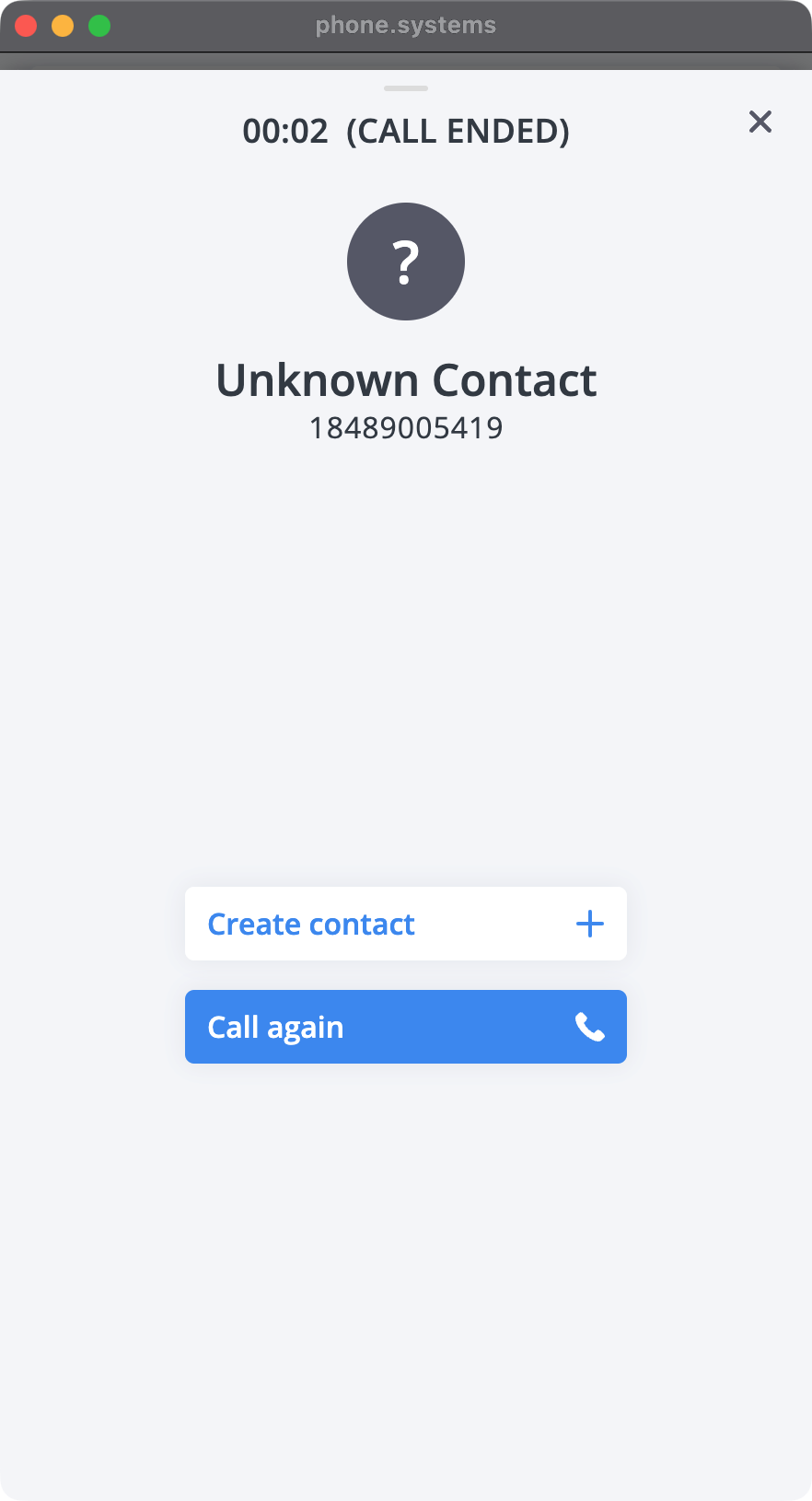
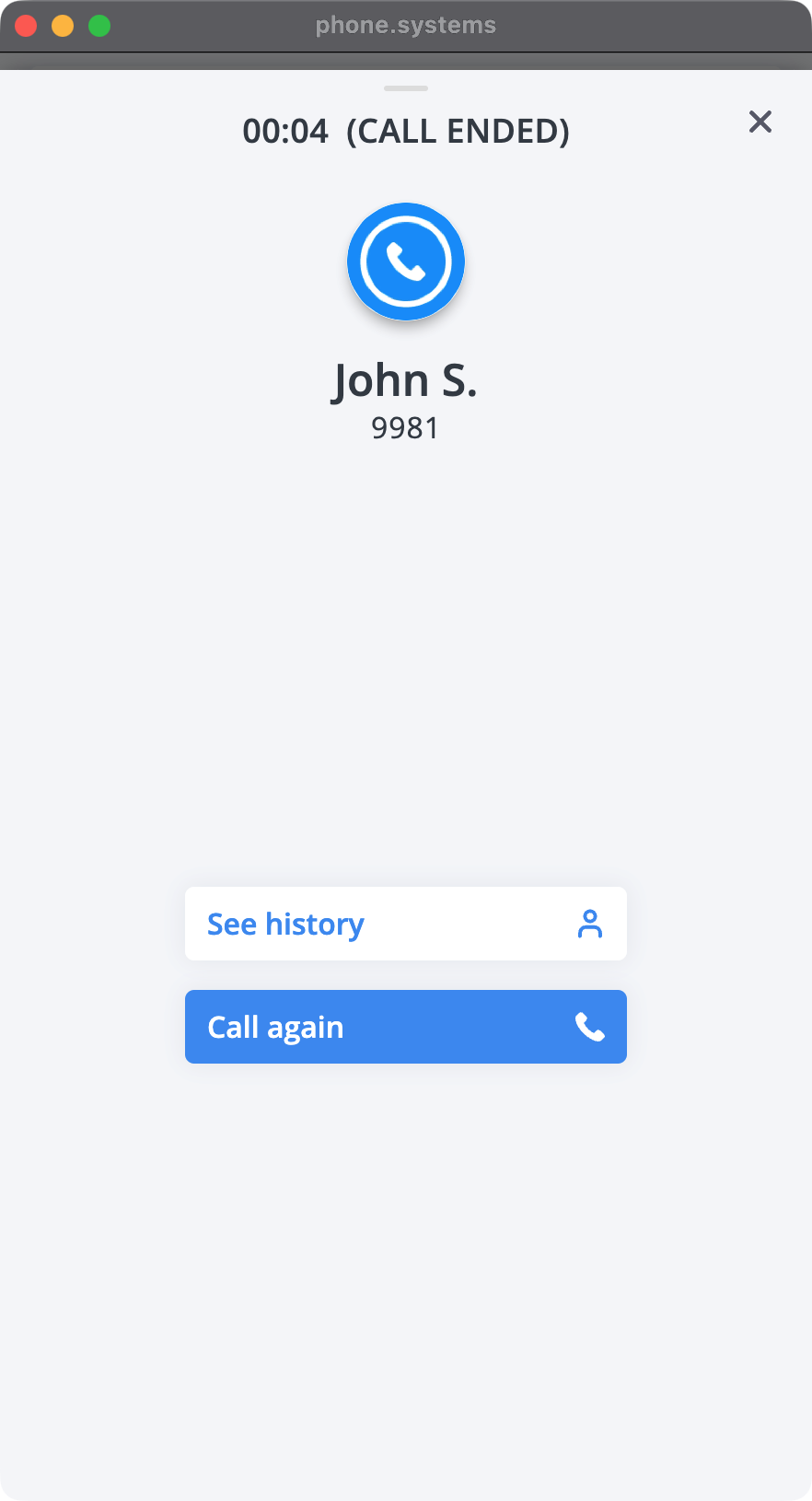
After a call ends, the app displays a Call Ended screen with quick actions and the call status. This screen appears after an outbound call ends.

The screen closes automatically after 5 seconds, or immediately after you select an action. You can also close it manually using the X button.

The following actions are available when the call participant is not saved in your contacts:

  • Create contact – Add the number as a new contact.

  • Call again – Redial the same number.

Call ended screen for unknown contact

Fig. 5. Call Ended Screen (Unknown Contact)

The following actions are available when the call participant is a saved contact:

  • See history – Open the contact call history.

  • Call again – Redial the same contact.

Call ended screen for saved contact

Fig. 6. Call Ended Screen (Saved Contact)


Call State Management

phone.systems™ app allows you to perform multiple actions during an active call. Click on the following shortcuts to learn more:

Mute/Unmute Your Microphone

Toggle your microphone on or off during a call to control whether the other party can hear you.

Mute/Unmute Your Microphone
Sound Settings

Switch the sound input and output methods.

Sound Settings
Holding/Unholding a Call

Place the current call on hold or resume it, allowing you to manage multiple tasks or conversations.

Hold/Unhold a Call
Using the Keypad

Open the dialpad to enter digits during a call — useful for extensions, IVRs, or access codes.

Using the Keypad
Blind Transfer

Transfer the active call directly to another number without speaking to the recipient beforehand.

Blind Transfer
View in CRM

Open the synced contact’s record directly in your connected CRM.

View in CRM

Mute/Unmute Your Microphone

  • To mute your microphone during an active call, click the mute icon. When muted, the icon will turn blue.
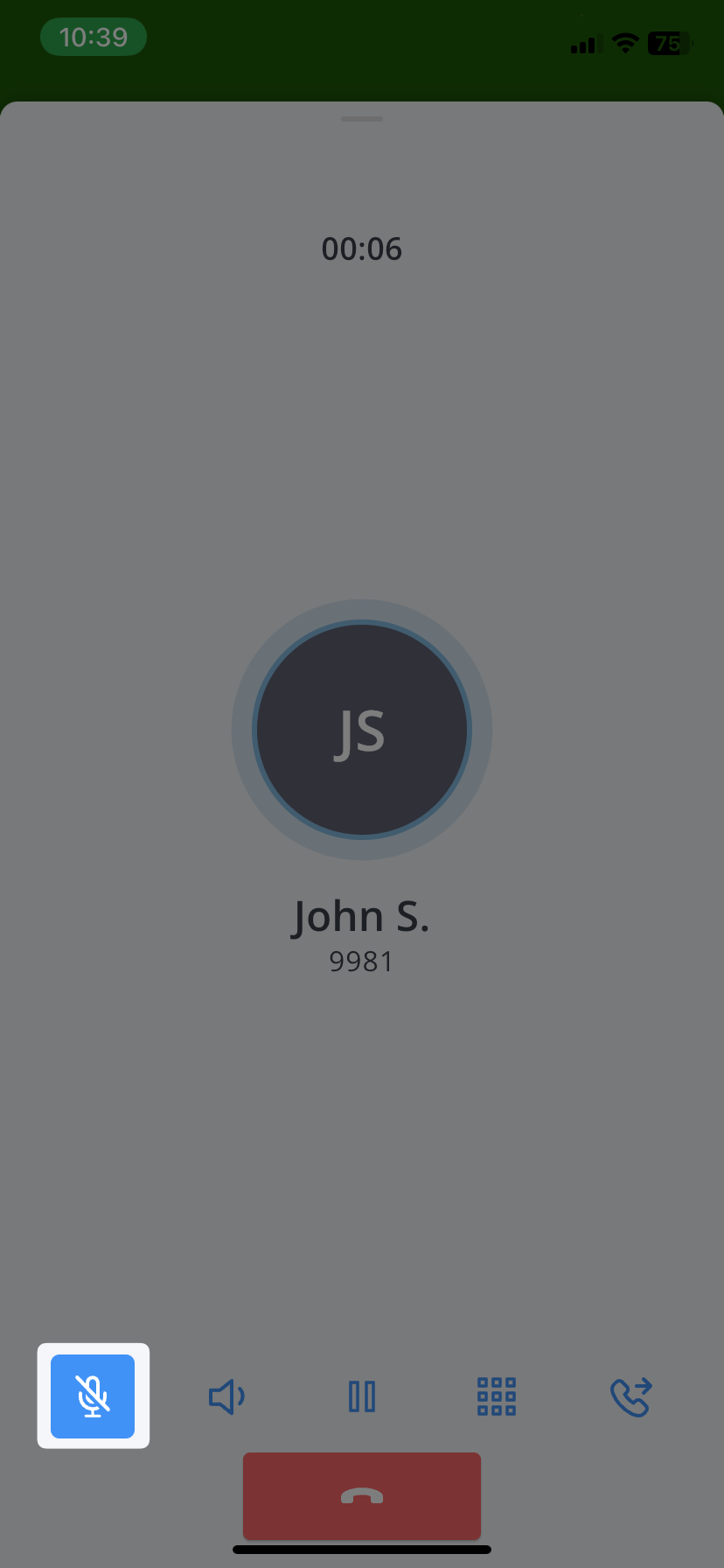
  • To unmute, click the mute icon again.

Muting Your Microphone

Fig. 7. Muting Your Microphone


Sound Settings

Sound settings control which microphone (input) and speaker or headset (output) are used during a call. The options differ depending on whether you are using the mobile or desktop app.

On mobile, the sound button toggles the loudspeaker.

  • To enable the loudspeaker, tap the sound icon. The call audio switches to the device speaker.

  • To disable it and return audio to the earpiece or connected headset, tap sound again.

Note

The loudspeaker toggle is only available on mobile.

Loudspeaker enabled on mobile

Fig. 8. Loudspeaker button

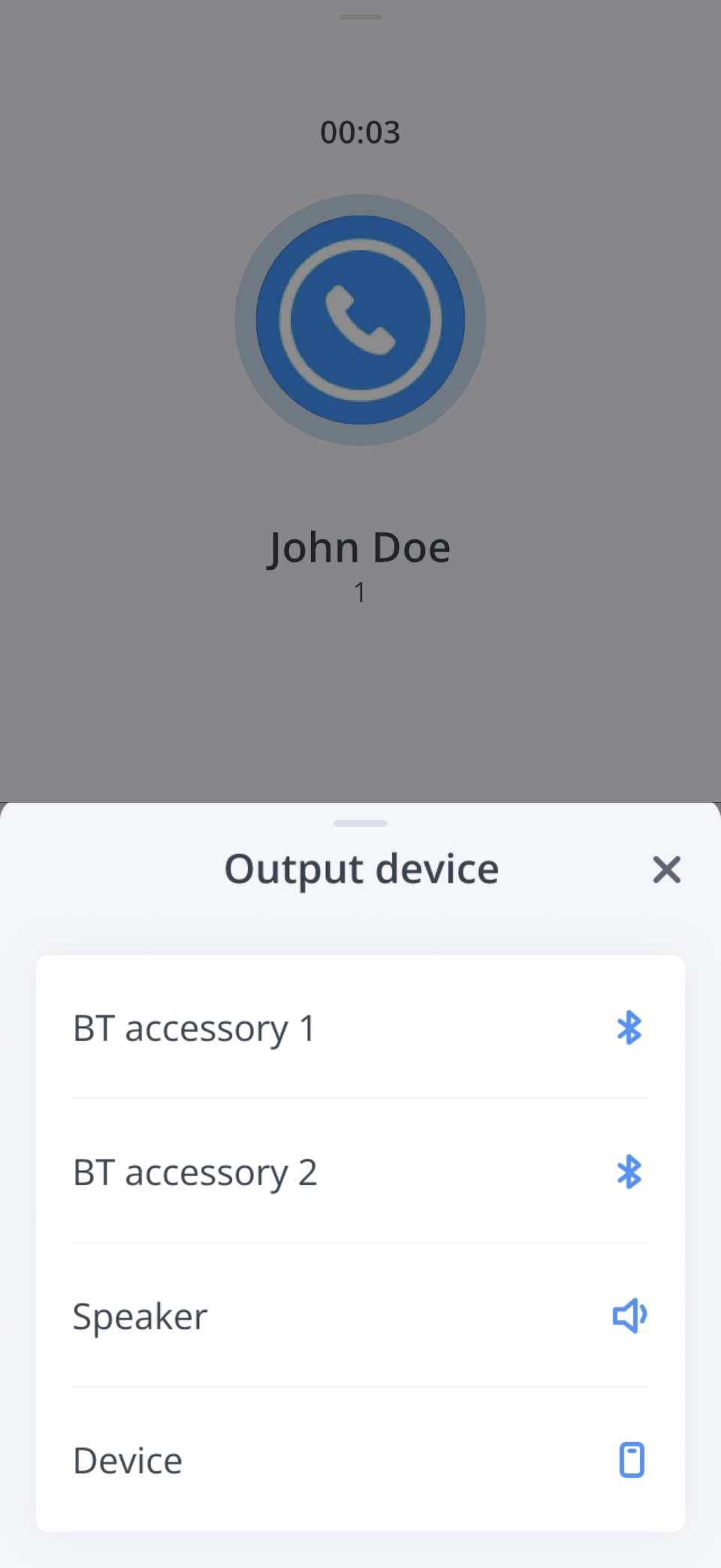
When a Bluetooth device is connected, the sound icon changes to soundbt . Tap it to open the Output device sheet, where you can choose between Bluetooth accessories, the speaker, or the device earpiece.
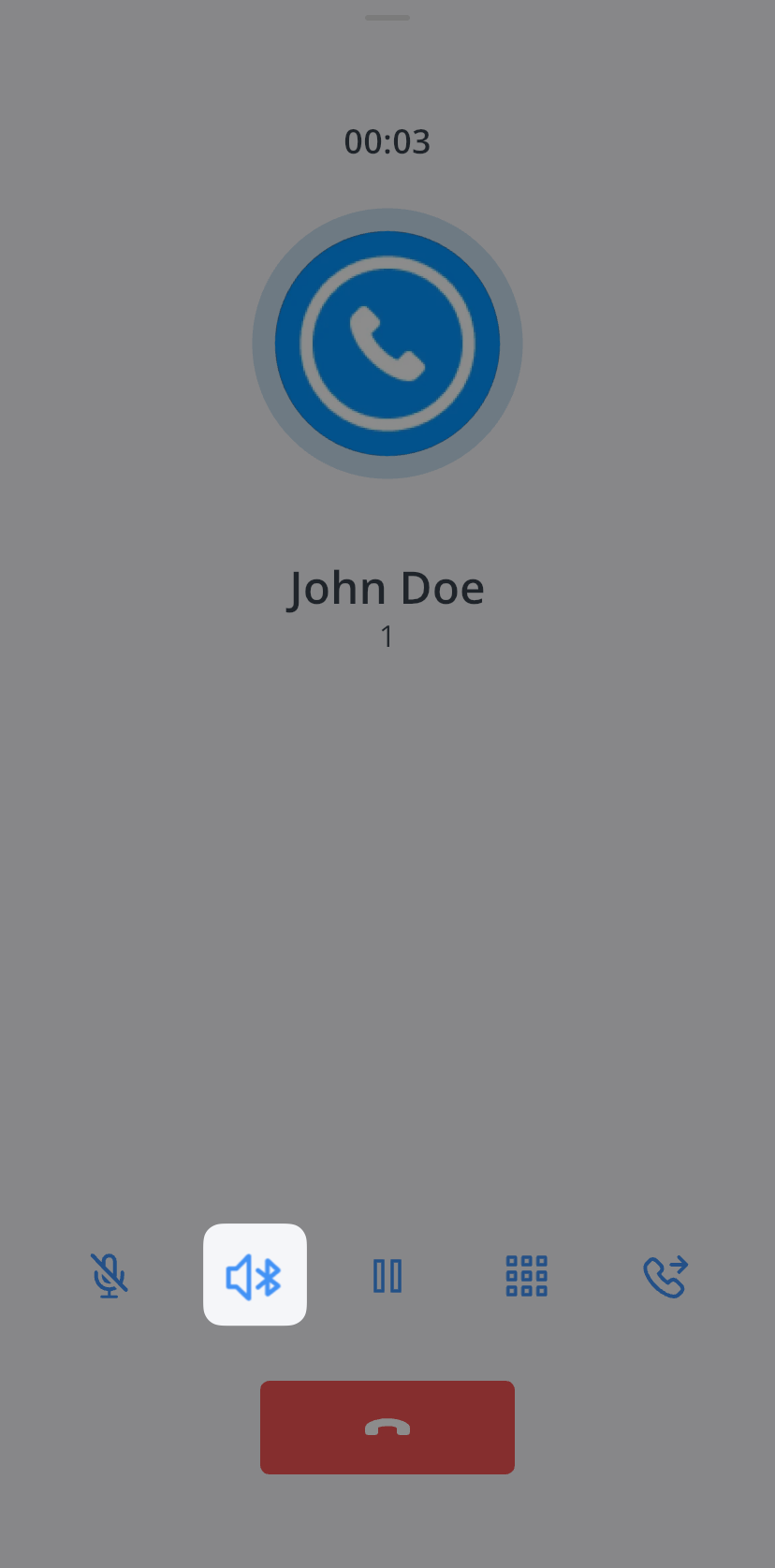
In-call sound button indicating Bluetooth device available (mobile)

Fig. 9. Output device button

Output device sheet with Bluetooth accessories, speaker, and device earpiece options (mobile)

Fig. 10. Output device selection

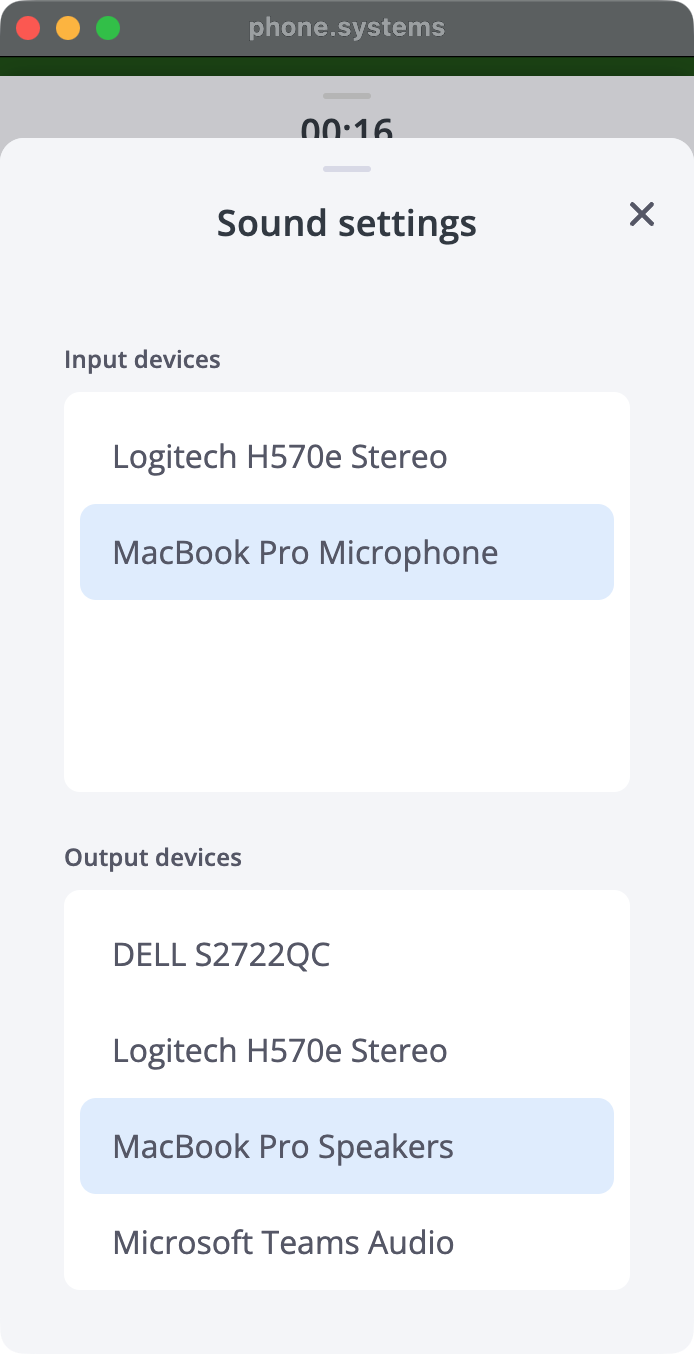
On desktop, clicking the sound button opens the Sound Settings window. Here, you can independently select which devices are used for input and output during an active call.

  1. Click the sound icon during a call.

  2. Under Input devices, choose your preferred microphone.

  3. Under Output devices, select your preferred speakers or headset.

  4. Close the window — the changes take effect immediately.

Tip

If a device does not appear, ensure it is connected at the OS level and recognized by your system before initiating or answering a call.

Sound settings button on desktop

Fig. 11. Sound settings button

Sound settings window showing input and output device selection

Fig. 12. Sound settings window


Hold/Unhold a Call

  • To put a call on hold, click the hold icon. The text “(On Hold)” will appear next to the call duration.
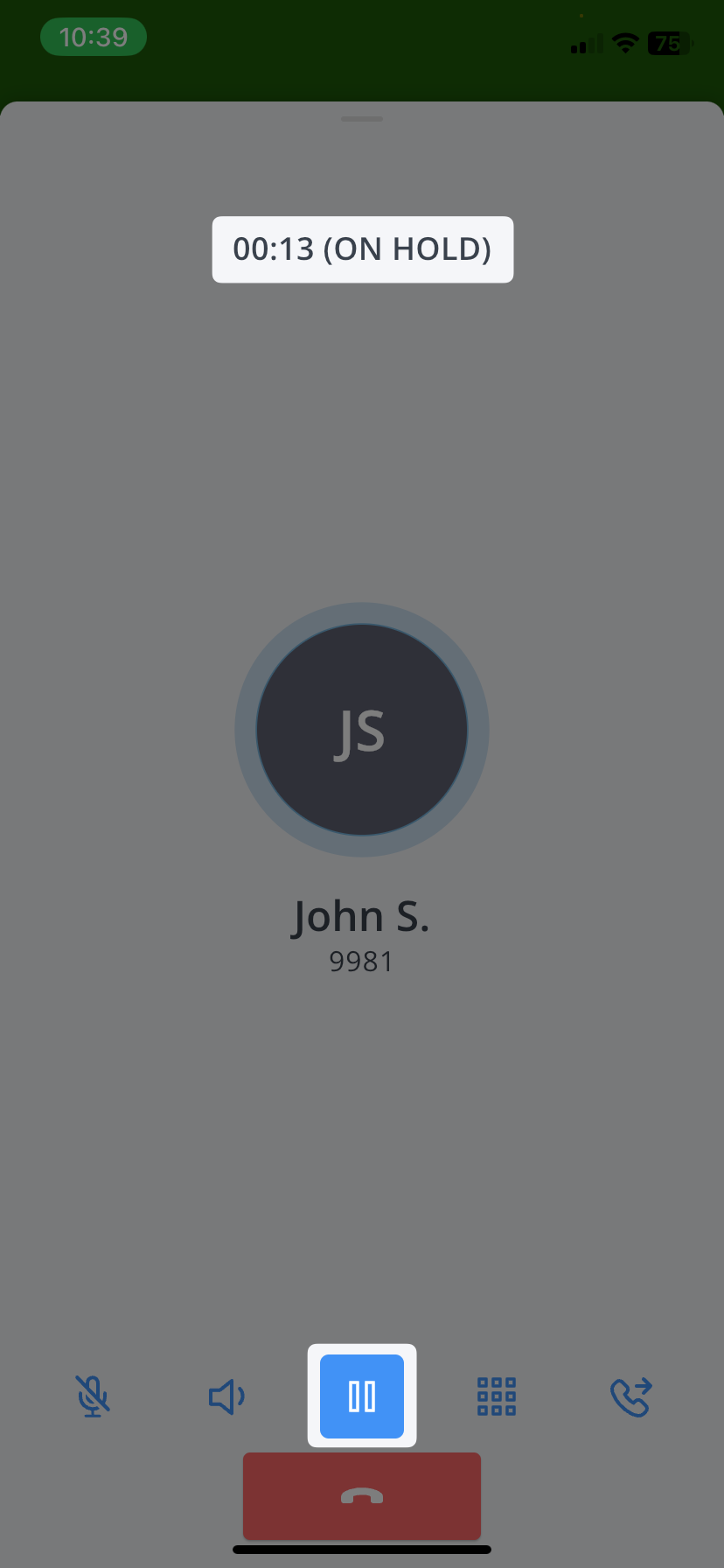
  • To resume the call, click the hold icon again.

On Hold Button

Fig. 13. On Hold Button


Using the Keypad

The Keypad feature sends Dual-Tone Multi-Frequency (DTMF) signals during a call, typically used for navigating automated phone menus or entering passcodes.

  1. To activate the keypad, click the keypad icon during an active call. The keypad will appear, allowing you to enter the necessary digits.
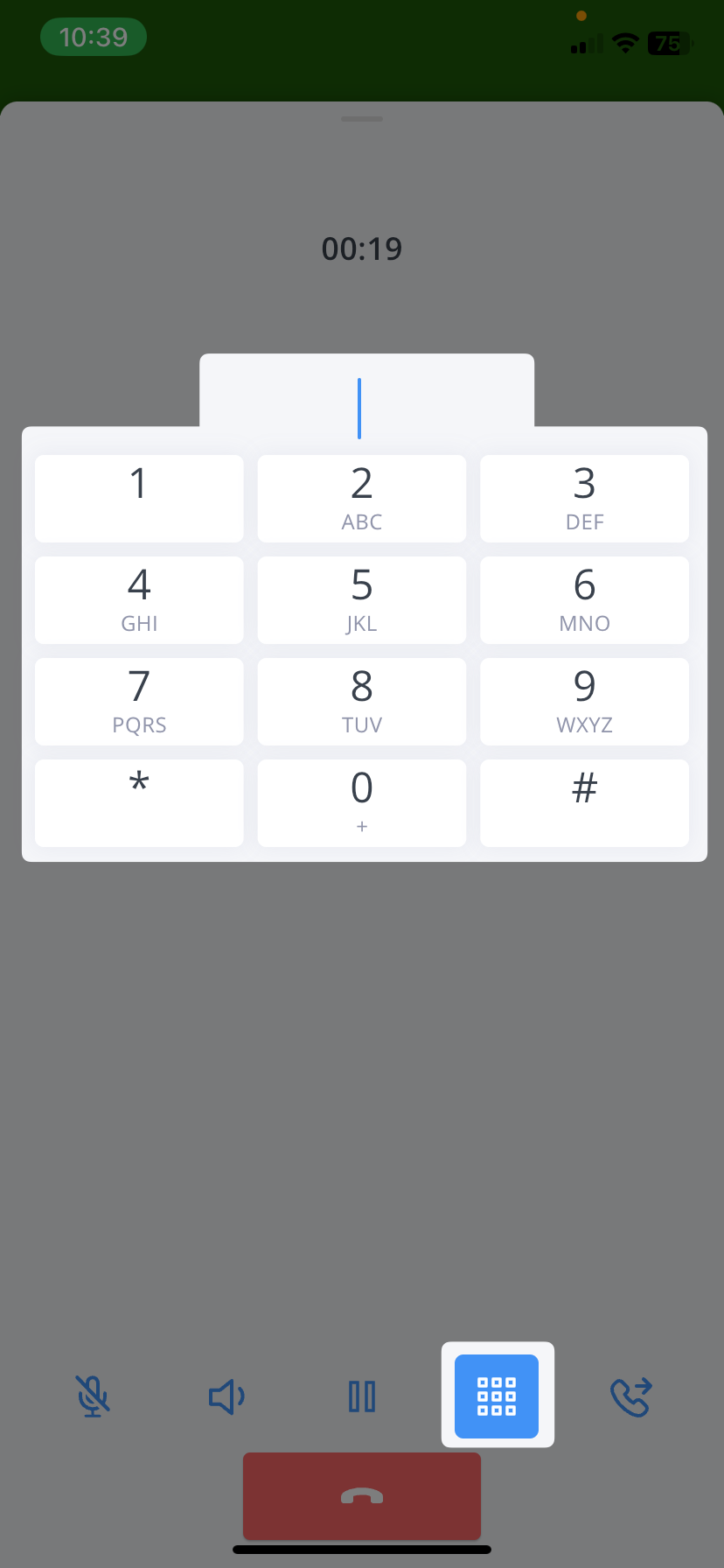
  2. To close the keypad, click the keypad icon again.

Keypad Interface

Fig. 14. Keypad Interface


Blind Transfer

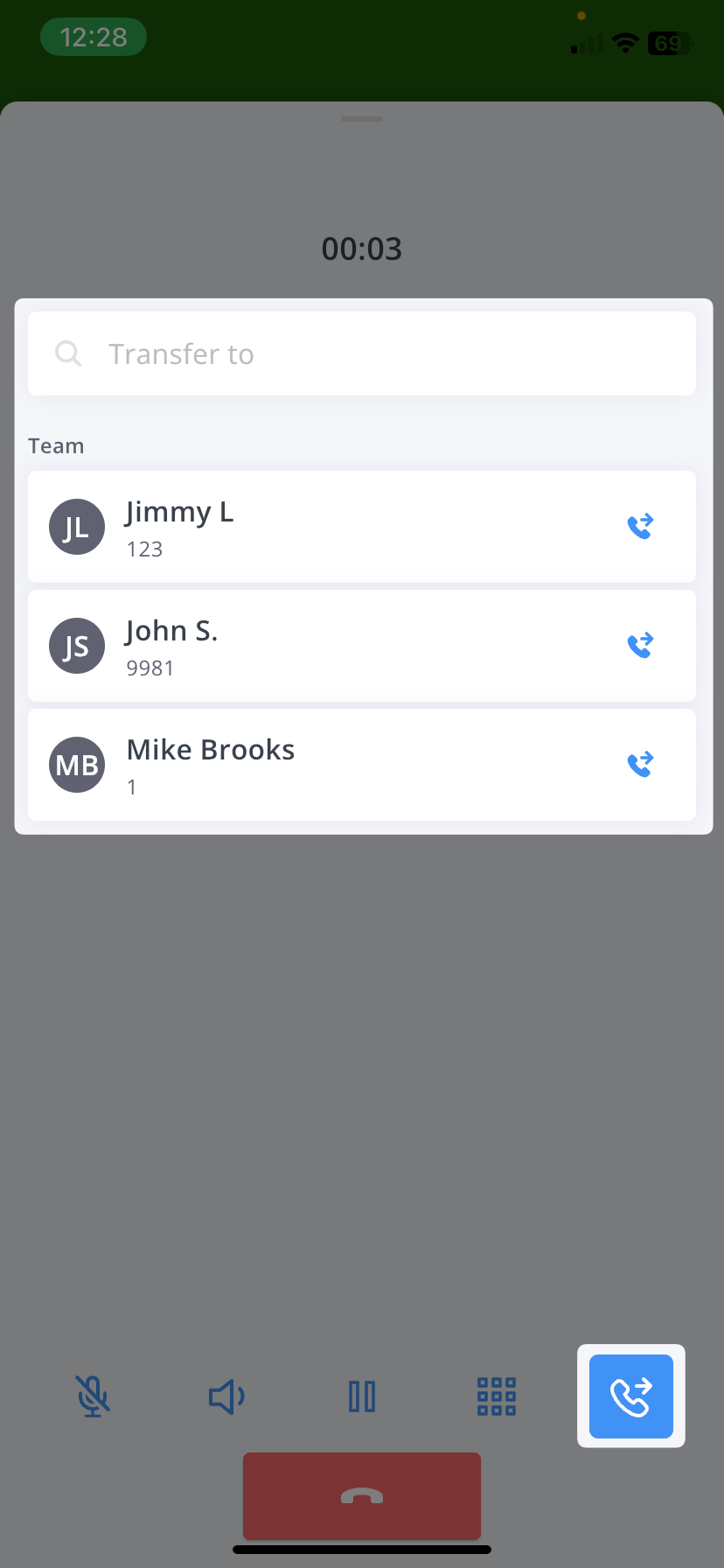
The Blind Transfer feature allows you to transfer a call to another user without speaking to the person first.

To perform a blind transfer, follow the steps below:

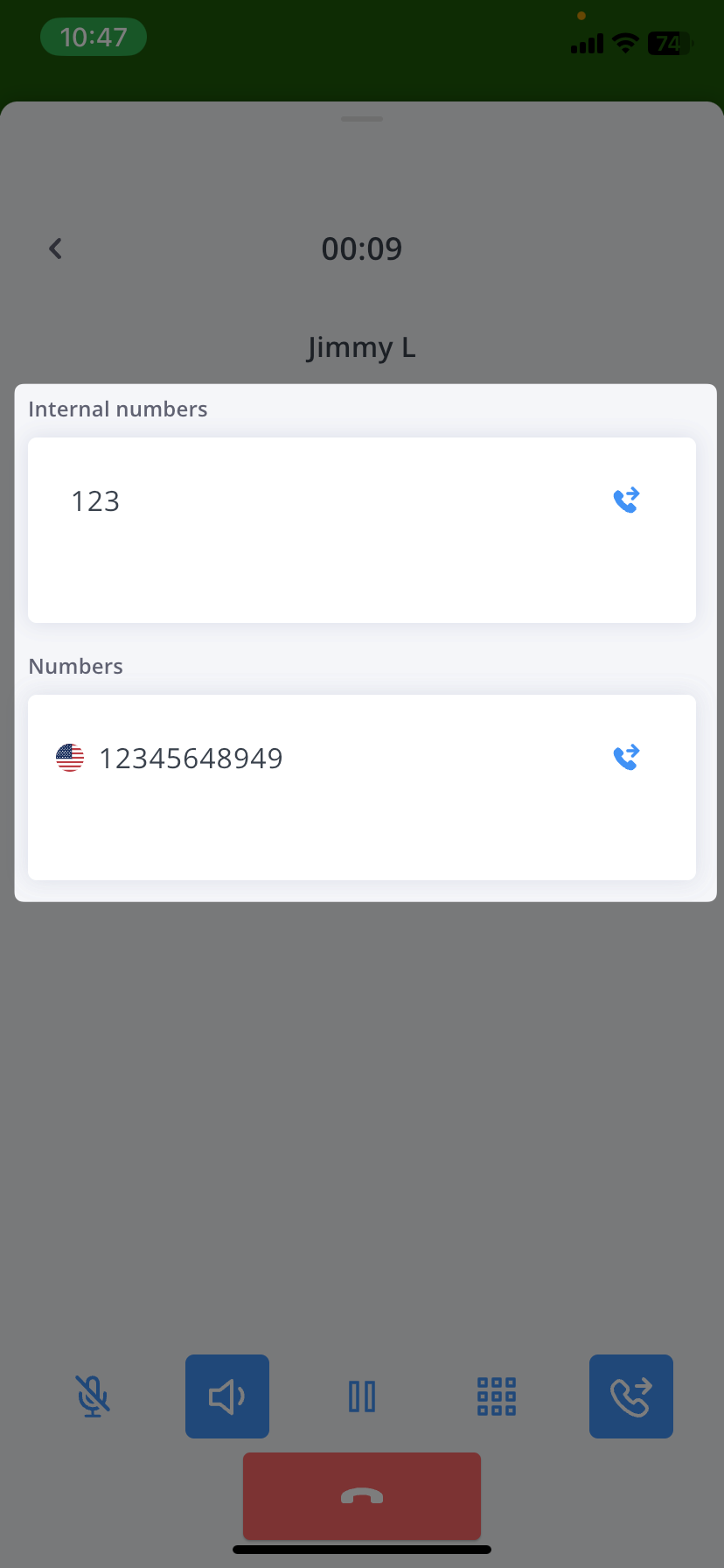
  1. During an active call, tap the blind_transfer icon.

  2. Select the user you want to transfer the call to.

Selecting a Contact

Fig. 15. Selecting a Contact

  1. Choose the number where the call should be transferred.

    Entering or Selecting a Number

    Fig. 16. Entering or Selecting a Number

Once the number is selected, the call will be transferred, and your connection will end.


View in CRM

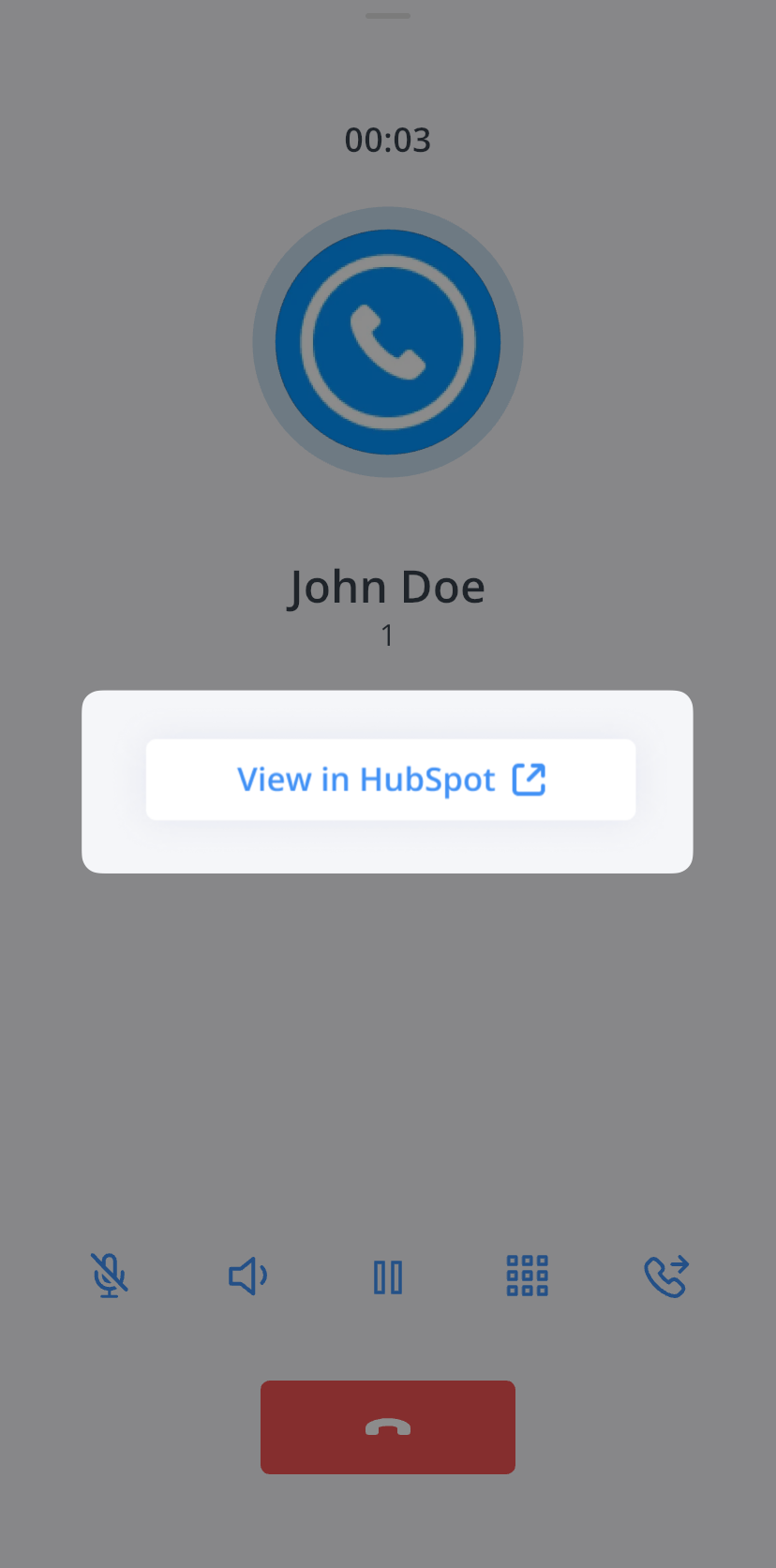
When a contact is synced from a connected CRM integration, a View in CRM button appears on the in-call screen. This feature lets you instantly open the contact’s record in the integrated CRM platform without leaving the phone.systems™ app.

  • To open the contact record in your CRM, click View in CRM.

  • The contact’s profile will open in a new browser tab or window, depending on your browser settings.

Note

The View in CRM button only appears if the contact is imported or synced from your connected CRM.

View in CRM button visible during an active call

Fig. 17. View in CRM button during an active call


Add a New Contact

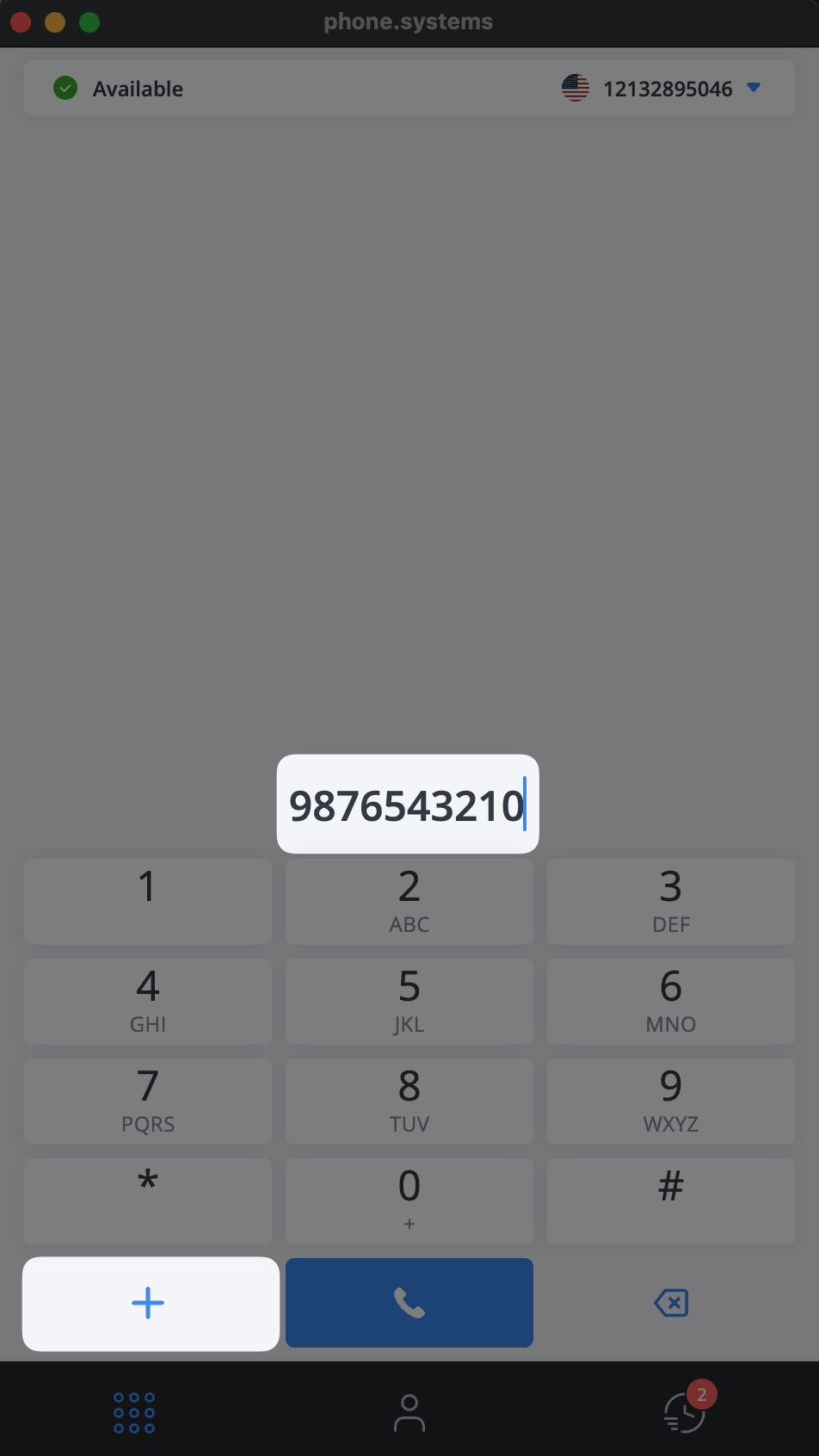
To add a new contact straight from the dialpad screen, follow these steps:

  1. Input a phone number of the new contact using the dialpad.

  2. Click on the +-sym button.

Create Contact Button

Fig. 18. Create Contact Button

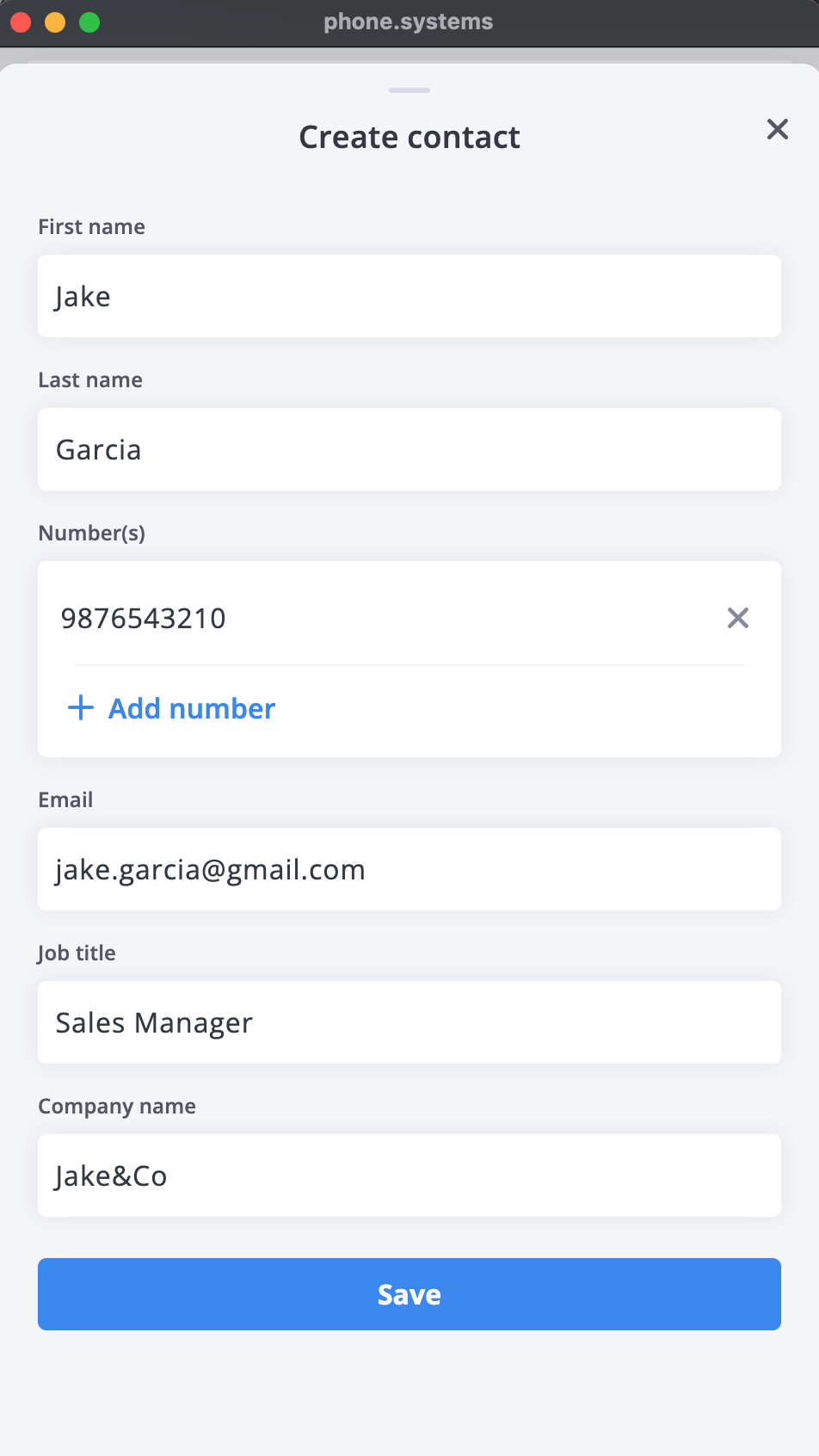
  1. A contact creation screen will appear. Enter the following details:

    • First Name: The first name of the contact.

    • Last Name: The last name of the contact.

    • Number(s): One or more phone numbers of the contact.

    • Email: The email address of the contact.

    • Job Title: The contact’s job title.

    • Company Name: The contact’s company name.

  2. Once you have entered all the details, click Save to create the contact.

Create Contact

Fig. 19. Create Contact